electrocd

Blog

4252 results
  • 623
  • 624
  • 625
  • 626
  • 627
  • 628
  • 629
  • 630
  • 631
  • Aérosol in Vital

    “Review”, MP, Vital, no. 160, February 3, 1999
    Wednesday, February 3, 1999 Press

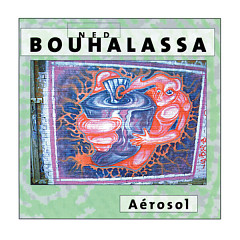
    Ned Bouhalassa’s work is far more angular; sounds are sourced from a much wider palette than Copeland’s and are combined in volatile, unpredictable compositions. This CD is also a release in the [compact-compact] ‘short duration’ series and is a reverse-order retrospective (1998-1990) of some of his work. He also had tracks included on the … of Drones series and is himself closely connected to San Francisco’s Sound Traffic Control, “a media arts assemblage that features a unique real-time matrixed spatial audio system through which musicians, engineers, conductors, DJ’s, and sound sculpture form an interwoven surround sound orchestra” (Phew! Their definition—wotta mouthful! I think it means something like: They’ve got a hifi and maybe a working mixer!).

    Aérosol opens with his latest work titled Jets and is based on movement away from… Some sounds scurry off, darting and casting nervous, uneasy glances, others hurl themselves violently towards the edges of the audio field. Also included is the track Move 1, which appeared in another, shorter version on The Swarm of Drones 2CD compilation released in 1995 (Asphodel, again). This piece is ‘based on an idea of representing animal/human movement through sound, and explores the possibilities of generating rich evolving textures from single samples.’ Headphones recommended!

    The track Constamment (autoportrait) dating from 1997 contains sound elements which represent various aspects of Ned’s past and present, and includes several nods and a wink in the direction of what has come to be known amongst the young and frivolous as ‘techno music’—y’know: racy drums which boom, boom for a while and then there’s a whoosh, maybe a girl yells something about shakin’ yer booty and then boom, boom one mo’ ’gain.

    These CDs have been created by two inspired and highly innovative young composers of electroacoustic music. If you’ve not got anything released on this peerless Canadian label, then this is an excellent place to start. If you’re already familiar with their releases, then these two CDs with surely augment your collection. Absolutely brilliant.

    Absolutely brilliant.

    Rendu visible in Vital

    “Review”, MP, Vital, no. 160, February 3, 1999
    Wednesday, February 3, 1999 Press

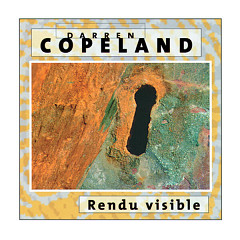
    I first heard Darren Copeland’s music on the Storm of Drones a 3CD released by Asphodel in 1995 — he contributed two excellent tracks, which captured his unique sound. (The first of these three CDs was dedicated to pieces previously released on empreintes DIGITALes, and exposed this label and its music to a wider audience.) The pieces on this new release, another in the series of ‘CDs of short duration for half the price’ by empreintes DIGITALes, are of a similar ilk. (empreintes DIGITALes, if you’ve just tuned in, [is] one of my favourite labels, and consistently release amazing music. By now, it could probably be considered the foremost label of electroacoustic discoveries.)

    Copeland works exclusively with recordings of environmental sounds, and is a true sound-ecologist (along with, amongst others, Hildegard Westerkamp—one of my heroes—listen to [her] full-length CD Transformations on this same label). Back to Darren: Rendu visible contains 3 tracks composed between 1993 and 1996. All of them consist of carefully blended, sometimes heavily processed environmental sounds. However the original sources remain quite recognisable—all part of Copeland’s intention to stimulate visual imagination.

    Most of us have been to a beach and listened to the sea, but where in the head are the shores we hear in his music? The gulls are confined in a huge reverberant shell, the human voices swirl as if spinning on a silent merry-go-round.

    The terrain shifts and shakes continually like a slow, jittery film shot through the shuddering heatwaves rising off a hot road, which weaves through a strange land. Twisted, asthmatic animals loom large, then recede, only appearing to quicken the pulse. Space creases the speakers and buffets the room. Doors open and reveal long corridors where lights flicker staccato and suggest weird, familiar forms—dream apparitions trailing luminous gossamer veils.

    empreintes DIGITALes […] consistently releases amazing music.

    Ding Dong de luxe in Splendid E-Zine

    “Review”, Andrew Magilow, Splendid E-Zine, February 1, 1999
    Monday, February 1, 1999 Press

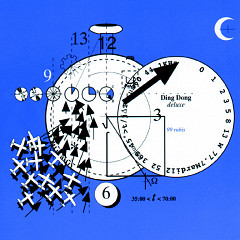
    Taking a massive swan dive off of the proverbial “experimental diving board” this short sound compilation disregards anything conventional. Ranging from a few seconds to a few minutes, everything from French accented babbling to everyday environmental sounds are on this 99 track undertaking, producing a bit of mayhem and a lot of sheer eccentricity. While different from most releases, Ding Dong Deluxe is sometimes a bit too disconnected, lacking a resilient, full bodied fluidity due to the variety of artists exposed. Or perhaps it’s Ding Dong’s determinedness to keep things unconventional, irrational and high strung that propels me to play it repeatedly!

    Aérosol in CFLX 95.5 FM

    “Délire actuel: Review”, François Couture, CFLX 95.5 FM, January 28, 1999
    Thursday, January 28, 1999 Press

    Ned Bouhalassa is an electroacoustician from Montréal. When Aérosol was released, he was a fan of techno music and a DJ at a college radio station, but also teached at Concordia University and was president of the Canadian Electroacoustic Community (CEC). This double-sided “serious/less serious” pattern can also be found in his works. Aérosol (referring to the paint cans used by graffitists) is a collection of five pieces composed between 1990 and 1998. One finds on this record a refreshing inspiration coupled with a poetic sense not unlike his mentor Francis Dhomont. Bouhalassa uses the same sonic forms, he has Dhomont’s talent for evocation and his sense of sound syntax, reaching a high level of quality in the art of the “cinema for the ear.” But he also adds a breeze of youth, particularly through the use of techno music elements. Jets and Move 1 are impeccably constructed, but Constamment (autoportrait), a selfportrait, suffers a bit from over-fragmentation, making it hard for the listener to follow.

    … une inspiration rafraîchissante qui cotoie la poésie des sons…

    Transformations in Art Zéro

    “Critique”, Dan Warburton, Art Zéro, no. 14, January 1, 1999
    Friday, January 1, 1999 Press

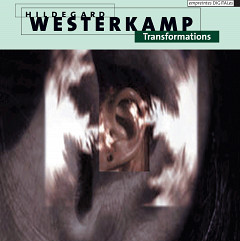
    Le souvenir du Presque rien #2 de Ferrari — l’idée d’un commentaire non sans ironie du compositeur sur l’action — est évoqué dans Kits Beach Soundwalk de Hildegard Westerkamp; en filtrant les sons de la ville de Vancouver, nous découvrons le monde sonore des bassins d’eau, le souffle des bernacles. Ailleurs sur l’album Transformations [IMED 9631], Westerkamp explore les possibilités timbrales de la nature (des cigales, des corbeaux…), mais son portrait de la ville, A Walk Through The City, est un peu moins convaincant — on se demande si elle n’aurait pas pu choisir un texte plus intéressant que le poème de Norbert Ruebsaat.

    Musiques naïves in Etch

    “Review”, Davis Ford, Etch, no. 5:1, January 1, 1999
    Friday, January 1, 1999 Press

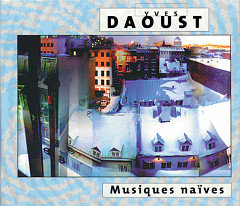
    Yves Daoust is a master of sound manipulation. In the beginning, a piano fights for space with itself. Two minutes in, there is a chaotic battle of notes involving the piano vs. that same piano, which ensues into a melee of bickering between the piano’s close relatives and finally, burst of white and pink noise which drive the piece into the new millennium. As the storms calms, the sounds of rain is introduced as a sort of closure. This 10-minute absorption follows with the familiar sound of a child’s swing-set. Daoust stretches the screeching hinges farther and farther out into a computer-generated piece which could pass for hypnotic robot-speak. Daoust’s strength lies in his ability to take found sounds and stretch them into a new, yet unheard environment. At the same time, artificial sounds emulate our daily environment. It is a dichotomy that proves exciting with every listen. The final piece, Fantaisie is created entirely from radio samples. The environment Daoust sculpts proves to be such on oxymoron, it is disturbing, yet equally enthralling. A distant piano rambling on, stuck in a decrementing timer, slowly winding themselves down, while other samples of otherworldly radio nature weave their way into the mix. Musiques naïves is perhaps the most exciting collection of found, and manipulated sound I have ever witnessed.

    Yves Daoust is a master of sound manipulation.
  • 623
  • 624
  • 625
  • 626
  • 627
  • 628
  • 629
  • 630
  • 631