electrocd

Blog

4252 results
  • 614
  • 615
  • 616
  • 617
  • 618
  • 619
  • 620
  • 621
  • 622
  • Les méandres du rêve in Guide ressources

    “Critique”, Philippe Tétreau, Guide ressources, September 1, 1999
    Wednesday, September 1, 1999 Press

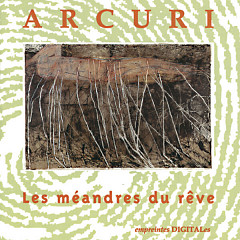
    L’électroacoustique conçue par Serge Arcuri se laisse aisément apprivoiser. Nous avons là l’occasion de plonger dans des climats insolites mais fertiles en sensations. Les séquences réunies sur ce disque contiennent quantité d’images sonores que l’on croirait tirées de films portant sur les grandes régions désertiques. D’ailleurs, Arcuri a signé la trame musicale de documentaires et de films (dont Liste noire). Différents instruments (hautbois, cor anglais, harpe, cor français, percussions) soliloquent sur la trame des sons ambiants.

    … l’occasion de plonger dans des climats insolites mais fertiles en sensations.

    empreintes DIGITALes in Under the Volcano

    “Review”, Paul Lemos, Under the Volcano, September 1, 1999
    Wednesday, September 1, 1999 Press

    It is a great pleasure to be able to write about some of the recent music coming from Canada’s premiere new music label, empreintes DIGITALes. During the past decade, empreintes DIGITALes has consistently issued some of the very best electroaoustic music being made. Unlike the recordings I often review from labels like Mego, Soleilmoon, Trente Oiseaux etc…, those issued on empreintes DIGITALes are, for the most part, made by classically schooled composers who have studied composition at major universities and have been involved with academic musical explorations for many years. These are fully composed works of musique concrète, pristinely recorded and beautifully presented. So, if you are even slightly interested in the new wave of experimental electronic music pouring out of the US, Germany and Austria, I strongly urge you to find some of the music presented here. This is the real deal. Suffice it to say that you will be blown away.

    During the past decade, empreintes DIGITALes has consistently issued some of the very best electroacoustic music being made.

    21 situations in Chicago Reader

    “Review”, Peter Margasak, Chicago Reader, August 27, 1999
    Friday, August 27, 1999 Press

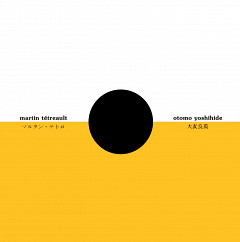
    These days it’s not so strange to think of the DJ as a musician, and between hip-hop-related artists DJ Shadow and DJ Spooky there’s been enough ink spilled on the subject to fill a few books. But it’s been a iong time coming: In the early 80s, long before the term turntablist came into being, a guy named Christian Marclay was conducting wild experiments with vinyl records that had nothing to do with breakbeats. Physically gluing pieces of different John Cage records together or layering sounds from unrelated records to form jarring collages, Marclay was as important as any hip-hopper in elevating the turntable from playback device to artistic tool. Montréal’s Martin Tétreault, once an experimental visual artist, began working in a similar vein in 1984, and in the last few years he’s released a flurry of fascinating recordings that go well beyond using the record player as a substitute for the sampler—a machine that, by the way, he dismisses because it lacks the serendipitous possibilities of a turntoble, whose output can be radically altered by something as random as a heavy footstep across the room. On Callas: la diva et le vinyle (like most of his work, on Ambiances MagnetiquesI, a duet with Robert Marcel Lepage, he actually plays some discernible passages from recordings by the eponymous opera great and engages in a genuine musical dialogue with the clarinetist, but most of his other recent stuHf is more abstract. He’s screwed with both records and record players, affixing objects to the vinyl or altering the design of the cartridge; he’s even made use of the sound of a turntable’s motor. And he’s a versatile performer: On Dur noyau dur, a duet with René Lussier, he meets the guitarist’s fractured, noisy Derek Bailey-like outbursts with equally disjointed and perpetually surprising eruptions; on 21 situations he answers the slippery electronic fuckery of Otomo Yoshihide with streams of unidentifiable gray sound. And on Île bizarre he counters the drum-machine improvisations of Ikue Mori and the broken-down samples of Diane Labrosse with lowkey noise bursts that eventually make it hard to tell who’s doing what. For his Chicago debut, he’ll improvise with local tabletop guitarist Kevin Drumm, whose recent Second (Perdition Plastics) further develops a unique musical language that no one’s likely to decode soon.

    “… in the last few years [Martin Tétreault]’s released a flurry of fascinating recordings…”

    21 situations in Splendid E-Zine

    “Review”, Irving Bellemead, Splendid E-Zine, August 9, 1999
    Monday, August 9, 1999 Press

    So, you think you’re a DJ? You think you can spin? You’re a vinyl superhero, spinning 19 discs at once, dropping needles like a clumsy junkie, matching beats like a… um, a really good beat matcher? Ha! Think again. It’s time for school…

    On 21 situations, Québec’s Martin Tétreault and Japan’s Otomo Yoshihide lay down 21 tracks of beautiful improvised noise, all coaxed from an array of prepared records (broken, scratched, taped together, who knows what!), altered record players, screwy needles, samplers and CDs. With the exception of a few voice samples, there are almost no recoginizable sounds, and there are definitely no beats (there’s not a Funky Drummer in the house!)

    Even without beats, each of the 21 situations has a terrific energy, a real momentum driving it along as Tétreault and Yoshihide spin and squirt all manner fuzz, bleeps and bloops, tinkles, rumbles, buzzes and pops out into the sonic landscape. If you’re a noise-improv connoisseur you’re probably already all over this one. And if you’re not a noise-improve connoisseur, well, what are you waiting for?

    Jean-François Denis, empreintes DIGITALes in CEC, Sur le vif / Quick Takes

    “Interview”, Ned Bouhalassa, CEC, Sur le vif / Quick Takes, August 1, 1999
    Sunday, August 1, 1999 Press

    Ned Bouhalassa: In January 2000, the empreintes DIGITALes label will celebrate its tenth anniversary. It is recognized around the world and its catalogue receives rave reviews from the critics. How do you explain this success?

    Jean–François Denis: In 1990, there were no independent record labels specializing in electroacoustic music. There were labels of course, but these were parallel activities of studios or organizations. We were a ‘fresh’ idea. Also, from the start, empreintes DIGITALes developed an artistic ‘policy’ (regarding both sound and graphics) and became very visible in the electroacoustic and experimental circles (due to its large publicity and the many mailings of catalogues). So there was a will to develop a signature, to be recognized. Of course, the quality of the works was always a priority.

    NB: What inspired you to set up your own record company?

    JFD: No one else wanted to do it. I went around to the other existing record companies (of this country) to offer to develop an electroacoustic sub–division, but returned unsuccessful. I also talked to several composers about a record production project: all were very interested… that someone else do it. When I spoke about it to Claude Schryer, he mentioned that he had been thinking about setting up a label as well. So in August 1989, we founded DIFFUSION i MéDIA (today a distributor) and the label empreintes DIGITALes, and we conceived the first 4 projects of the collection (Calon, Normandeau, Thibault and Électro clips).

    NB: Starting a new business is always risky, even more so in the case of a serious music record company. Did you have many doubts in the beginning?

    JFD: The risks? We were ready to work and, with the indispensable help of the composers, we faced only beautiful risks: to produce decent, superb, lavish CDs of music that we like. I believe that we need risk in order to constantly redefine ourselves, to question ourselves (even if it may mean going back to the starting point). The doubts? I wondered then what I would do with 1000 copies (the minimum at the time) of the same disc in my home: how do I get them out there to be heard? what about distribution? sales? We almost had to invent ways to reach our public! (We didn’t even know where to really find this public!)

    NB: The first Francis Dhomont double–cd, with its large booklet, was launched with pomp and circumstance before two exceptional concerts. Was this one of your most memorable launches? One of your wildest projects?

    JFD: The Montréal launches have always been a little special: in a Planetarium; disguised as a party–concert; café–croissant at 7 AM; in disco or punk bars. Of course the Dhomont box–set launch was important, though, if my memory serves me right, it was but a small part of a night which was celebrating Francis Dhomont’s 65th birthday. There was also a collage–homage piece from his students, assembled by Gilles Gobeil. There have also been other launches in Vancouver, Norwich (UK), Toronto, Birmingham (USA), and Paris…

    NB: The image of your label is immediately recognizable. What is always obvious is the attention that is given to the quality of the graphics. How would you describe Luc Beauchemin’s role?

    JFD: Luc Beauchemin conceived of the first design overhaul in 1991 (with the Daoust), as well as the second in 1996 (with the Harrison). (The OPAK cardboard box, used since 1996, is a collaborative effort.) As for the cover art, the composer is the one who suggests a work or commissions an artist (since Luc Beauchemin is also a graphic artist, some of the covers feature his work).

    NB: The only CDs on your label that feature works by different artists on the same release are the clips CDs (Électro clips and Miniatures concrètes). Why don’t you combine normal length pieces by different composers on one cd?

    JFD: Because I find these (mixed composers) CDs uninteresting to listen to. Each individual empreintes DIGITALes cd represents a unique musical ‘idea’; as a listener, I find that extremely enjoyable. The only exceptions stem from a very strong and original ‘concept’ (especially in 1990): that of the 3–minute electroacoustic clip. That, to me, is what makes it ‘possible’ to listen to these kinds of CDs.

    NB: How do you choose your cd projects?

    JFD: It usually starts with the music (heard in concert, during festivals — but very rarely from ‘demos’ received by mail) and follows with the composer’s approach, the integrity of their artistic approach.

    NB: How can a composer interest you in a cd project?

    JFD: It’s not easy actually, since I’m already drowning in daily mail in which I occasionally find a ‘demo’ – and I’m somewhat overloaded with work. But I can say that when a composer is recommended by a colleague, it usually helps (one should not forget as well that the production of a cd depends greatly on it being somewhat funded).

    NB: What do you think of distribution via the Internet? Do you intend one day to allow your clients to buy works that can be downloaded?

    JFD: The cd is only a medium. The advantage that it offers over previous formats is its sound quality specifically in the case of electroacoustic music duration and durability. As soon as there exists another support which offers similar sound quality, we’ll offer music in that format. It’s pretty obvious. So my answer is yes.

    NB: You wrote many works during the 80s. Do you think that you might one day make a cd featuring your own works?

    JFD: A few pieces have withstood the test of time (ten and fifteen years later). I really haven’t thought seriously about this. What do you think?

    … reconnue mondialement et reçoit régulièrement des éloges de la part des critiques

    21 situations in Vital

    “Review”, Dolf Mulder, Vital, no. 182, July 19, 1999
    Monday, July 19, 1999 Press

    Three new releases from the never resting Ambiances magnétiques label (Québec, Canada). The first one is a meeting between two turntable wizzards. It’s the first meeting between Martin Tétreault and Otomo Yoshihide. On 3 days in december 1997 they recorded 21 situations in a studio in Montréal. Through scratching records, manupaliting turntables and associated techniques they work out their ideas in pieces that only in two cases takes more than 3 minutes. Well done.

    Well done.
  • 614
  • 615
  • 616
  • 617
  • 618
  • 619
  • 620
  • 621
  • 622