electrocd

Blog

4252 results
  • 631
  • 632
  • 633
  • 634
  • 635
  • 636
  • 637
  • 638
  • 639
  • Léone in Splendid E-Zine

    “Review”, Noah Wane, Splendid E-Zine, June 8, 1998
    Monday, June 8, 1998 Press

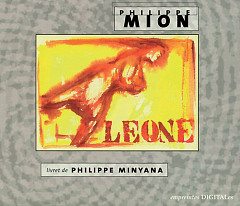
    To be honest, this is the first opera recording Splendid has reviewed. Before you envision 300-pound sopranos belting out Wagnerian arias in Viking garb, let me assure you the Léone is nothing like any opera you’ve heard before. The score for Léone is entirely electronic — disembodied sound blaring through loudspeakers — a symbol of detachment and alienation. The music is sparse yet expressive — punctuating the libretto. It is subdued, foggy almost, as if bubbling up from some subconscious recess of the mind. The plot, while perhaps tame by “Natural Born Killers” standards, is by operatic standards intense to say the least. Its treatment of such topics as schizophrenia, fetishism, bestiality, murder, and infanticide clearly sets it apart from even the most sordid of 20th-century operas. Remarkably, the vernacular style of librettist Philippe Minyana lends a sense of whimsy to the atrocities described in the story, resulting in a sort of “black fairy tale” atmosphere to the whole thing. Perhaps most importantly, the existence of Léone this close to the end of the century bodes well for opera surviving the turn-of-the-century mark.

    … bubbling up from some subconscious recess of the mind.

    Les dérives du signe in Computer Music Journal

    “Review”, Stéphane Roy, Computer Music Journal, no. 22:2, June 1, 1998
    Monday, June 1, 1998 Press

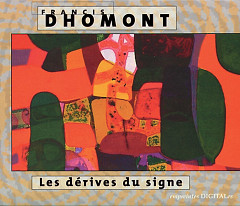
    The other cycle, Les dérives du signe, includes four works Novars, 1989; Chiaroscuro, 1987; Météores (Meteors), 1989; and Signé Dionysos (Signed Dionysus), 1986, rev. 1991. These pieces make subtle play on the ambiguity generated by shifts in meaning. We find here misappropriations of pre-existing musical sources in Novars and Chiaroscuro, the synaesthetic transfer of the sensations of speed and kinetic energy in the morphological shapes of the sound materials in Météores and the clouding of the paths that lead from natural sounds to novel, artificial sounds in Signé Dionysos.

    It is evident that Mr. Dhomont has a predilection for musical eyeles. Their themes allow us to understand some of the aesthetic concerns he has wanted to explore in his art. Throughout his treatment of these subjects, however, Francis Dhomont has never tried to preseribe any specifie way to listen to his music. Indeed, there is a perpetual concern in his music to encourage different listening strategies: formal, referential, programmatic, and so on. He has even tried to create unity between those diverse dimensions that can shape the musical work during the listening process. The program note Points de fuite serves as evidence of that fact:

    Audition/reading on many Ievels:

    1. Technical (kinetic study: glides in tessitura, mutations of masses, of densities; modifications of timbre; energetic eruption/dispersion; spatial mobility).

    2. Impressionistic (encounters, crossings, fusion of heterogeneous events which carry similar connotations; trajectories, velocities, displacements; the near and the distant; the passage)

    3. Symbolic (flight: running away; departure, wandering, lapse obliteration. The horizon, Kafka: Disappearing America).

    4. Ad libitum…

    To sum up, in these four CDs covering almost two decades of achievement, Francis Dhomont offers us acousmatic works of real substance that transcend very well the technological orientation implied by such music. When we listen to these pieces we discover many things about music, and something of its breathtaking vertigo.

    When we listen to these pieces we discover many things about music, and something of its breathtaking vertigo.

    Cycle de l’errance, Les dérives du signe in Computer Music Journal

    “Review”, Stéphane Roy, Computer Music Journal, no. 22:2, June 1, 1998
    Monday, June 1, 1998 Press

    Mouvances~Métaphores was first released in 1991, but has long been out of stock. empreintes DIGITALes / DIFFUSION i MéDIA has released a second edition of this double-CD set. Completed between 1982 and 1989, this work contains two large cycles, Cycle de l’errance and Les dérives du signe. The new edition includes some remixing and a complete repackaging; the discs are now sold separately rather than together, and the original booklet, which ran to over 200 pages, has been divided between the two, with the lengthy, but by now outdated, tribute celebrating Francis Dhomont’s 65th birthday relegated to the status of collector’s item.

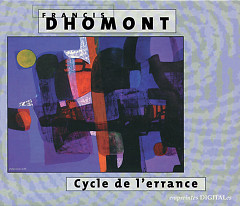
    Cycle de l’errance evokes in a highly poetic way the idea of departure, of travel—real or imagined—and the existential sadness associated with it. Three works make up this cycle: Points de fuite (Vanishing Points), 1981 … mourir un peu (… dying a little), 1984; and Espace / Escape (a bilingual anagram, “espace” meaning “space”), 1989. Here, Mr Dhomont was in part inspired by his own experiences, as witnessed by his program note: “wandering both in its proper and figurative meanings — movement, change, mobility, roving dreams upheaval, and revivals—all weave the very material of my life.”

    … evokes in a highly poetic way the idea of departure…

    Forêt profonde in Computer Music Journal

    “Review”, Stéphane Roy, Computer Music Journal, no. 22:2, June 1, 1998
    Monday, June 1, 1998 Press

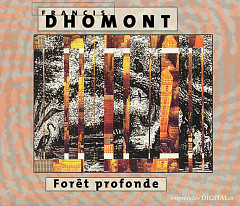
    Once upon a time, in a deep, dark forest… Forêt profonde is an acousmatic drama in thirteen sections hased on The Uses of Enchantment by Bruno Bettelheim. Those appatrently innocent stories that bathed our childhood are really trees that hide from us the mysterious roots of the forest the deep roots of the soul that Francis Dhomont probes in his psychoanalytical reading of fairy tales. This composition superimposes a rich counterpoint of voices, texts, and languages. At the heart of its gripping sonic material, alternatively mysterious or reassuring, like a fairy tale, we hear the thirteen episodes march by, keeping us spellbound.

    Francis Dhomont plays with archetypes in Forêt profonde, not only the ones brought up by the narration (death, happiness, courage, fear, and so on), but also those that are invoked by the underlying sounds. Thus, the archetype of comforting and appeasement, suggested by tender lullabies, is brusquely broken by the tragic and anguished character of unstable sonic morphologies. Like the fairy tales themselves, this piece enchants and bewitches; certain enigmatic passages show to what extent the art of sounds is able to explain the unexplainable. “What’s happening?” murmurs a strange, anxious young voice at the beginning. An undeniable reality hides behind the words that then reassure the child “‘tis nothing…’tis nothing, dear…try to sleep”—soft comfort which, like the happy endings of the fairy tales, turns us aside from the dark morbidity that hangs over our existence.

    If these tow works from a diptych, it is because deep in each forest there burns a black sun. Depth and darkness, linked in a single semantic universe, join together in this Cycle des profondeurs to evoke an existentialist anguish that is our lot to share. While Sous le regard d’un soleil noir was inspired by an affliction that turns toward the pathological, Forêt profonde touches on the imaginary world of childhood and the hidden face of the fairy tales that have peopled it. In both, text and music are so well integrated, each extending its resonanees into the other, that it is impossible to disassociate them. On many occasions, we find a narrator giving “clinical” commentary, but no such dryness is sufficient to disturb the dramatic trajectory of the musical discourse. Rather these commentaries serve to articulate the evolution of the drama, providing clues to the listener for understanding the meanings of the symbols and archetypes deployed in the music.

    Both discs are beautifully packaged in newly designed cardboard cases. The well-documented, bilingual booklets run 48 pages each, and include a listing of all citations and bibliographical references, and a detailed chronology of Mr. Dhomont’s works from 1972.

    Like the fairy tales themselves, this piece enchants and bewitches; certain enigmatic passages show to what extent the art of sounds is able to explain the unexplainable.

    Sous le regard d’un soleil noir in Computer Music Journal

    “Review”, Stéphane Roy, Computer Music Journal, no. 22:2, June 1, 1998
    Monday, June 1, 1998 Press

    In the autumn of 1996, the Montréal electroacoustic label [empreintes DIGITALes] released two new compact discs of the French [/] Canadian composer Francis Dhomont. These recordings present the two parts of a large-scale diptych, Cycle des profondeurs (“Cycle of Depths”), which the composer says may eventually expand into a triptych. The first CD is a new edition of Sous le regard d’un soleil noir (“Under the Glare of a Black Sun”), an acousmatic melodrama of more than 51 minutes in duration, realized between 1979 and 1981. The second is entitled Forêt profonde (“Deep Forest”), a more recent melodrama of more than 58 minutes in duration, composed between 1994 and 1996. For those who have followed the work of this important composer of rich electroacoustic works in the French acousmatic tradition (sometimes called “musique concrète”, though the two terms are not really equivalent), it is also worth noting the reissue of the out-of-print 1991 double CD containing his other major opus, Mouvances—Métaphores (“Mobility—Metaphors”). This work comprises two cycles: Cycle de l’errance (“Cycle of Wanderings”) and Les dérives du signe (“The Drift of the Sign”).

    Sous le regard d’un soleil noir

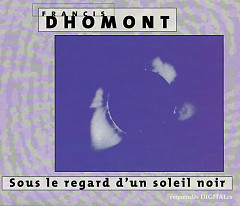
    Here, the black sun can burn the wings of those such as Icarus, who come too close. This is a tormented work, spotlighting the schizophrenic vertigo of the anguished self. It is not, however, a musical adaptation of a thesis about insanity; rather, this is true program music, extracting from its extramusical subject an expressive substance of a quality rarely achieved in acousmatic music. The probing of the depths, characteristic of psychoanalysis, has inspired this magisterial work in eight sections. The fine quotes heard throughout are taken mainly from the writings of British psychiatrist and psychoanalyst, Ronald D Laing.

    In Sous le regard d’un soleil noir, Mr. Dhomont creates an enigmatic and dreamlike atmosphere, with the subject matter centered on the self. The drama is built up as the barrier crumbles between the self and the external world. The inner being is then invaded, or better, sucked into the black hole of schizophrenia: “One is inside then outside what one has been inside. One feels empty […] to eat and to be eaten to have the outside inside and to be inside the outside. But this is not enough […] and inside oneself there is still nothing.”

    This is the worrying black sunrise, as torrid as the intensity of the drama it engenders. The drama takes many forms in the work. Among others, there is an obsessive pitch, B, whose timbre serves to express a searing anguish. There is also the breakdown of the self, evoked in the Engloutissement (“Engulfment”) of Section 2 by the immersion in fluid sonorities that are driven on to an asphyxiation of the personality, until only an inarticulate shadow remains at the bottom of the abyss. Then there is the Implosion of Section 4, and the progressive Pétrification of the personality in Section 7. The first sound of Citadelle intérieure (“Interior Fortress”), a heavy door that suddenly slams shut symholizes the walled-in isolation of the personality. Finally, there is the vocal counterpoint at the end of the same section, spread out in space as if this distant voice, fragile and almost inaudible, symbolizes the loss of contact between the self of the individual and the consciousness of its own existence.

    … magistral…

    Les corps éblouis in Stridernews

    “Review”, Garth Cheddar, Stridernews, no. 5, June 1, 1998
    Monday, June 1, 1998 Press

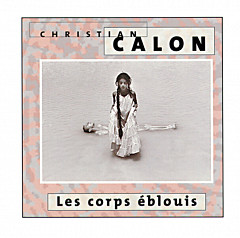
    The most recent release in the so far very interesting ‘budget’ [compact-compact] series of this fine electroacoustic label is by a relative newcomer who also has a full-length release available on empreintes DIGITALes. Les corps éblouis is a piece realized using only sound material from electric guitar, which has been manipulated to such an extent that only a few passages are recognizable as said instrument. Nicely flowing in that GRM style you know and love, and free from the abrupt, jarring sounds of much tape music, but not without a certain controlled intensity. The piece builds to a spiraling and dramatic (though not over-dramatic) climax which concludes with a nod to Hendrix. Worth checking out; this is one of the good ones.
    … this is one of the good ones.
  • 631
  • 632
  • 633
  • 634
  • 635
  • 636
  • 637
  • 638
  • 639