electrocd
  • This website is also available in English.

Blog

4252 results
  • 103
  • 104
  • 105
  • 106
  • 107
  • 108
  • 109
  • 110
  • 111
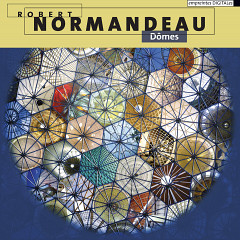
  • Dômes in The Sound Projector

    “Être aux anges”, Ed Pinsent, The Sound Projector, March 28, 2016
    Monday, March 28, 2016 Press

    I had the idea Robert Normandeau, famed Montréal electroacoustic composer, was a regular name in these pages, but in fact we haven’t noted a release from him since 2001’s Claire de terre, his ambitious inter-galactic composition that drunk in the beauties of images of the earth seen from outer space. Before that there was the 1999 release Figures, with its memorable opening track Le renard et la rose composed of multiple layers of people laughing (to quite nightmarish effect) and the 19-minute Venture, which used samples from Normandeau’s prog-rock LP collection. Normandeau is a significant composer and establishment figure of many years standing, for instance he helped found the Canadian Electroacoustic Community in 1987.

    His Dômes (empreintes DIGITALes IMED 14128) is a compilation / survey of five recent-ish works, not really connected with each other. La part des anges offers an ethereal and complex digital drone. It’s supposed to illustrate the way that alcohol evaporates through the walls of a barrel, or may be partially inspired by that fermentation process. In like manner, the composer tries to extract the essence of goodness from the choral material he is sampling and assembling here. Delicate, serene, unearthly in places; the listener may sip this aural brandy with some pleasure.

    His Kuppel is more earth-bound. Mundane, even. On one level, it’s an assemblage of field recordings, not unlike the sort of thing we hear in abundance from the German label Dekorder. Normandeau spent two months in Karlsruhe and recorded the trams, the church bell chiming on the Markplatz, and a squeaky door near the studio where he was working. There isn’t much radical sound-transformation going here on that I can detect, but the finished work was intended to be broadcast through the PA system of the art gallery ZKM_Kubus in Karlsruhe, thus cementing its status as a site-specific installation.

    Pluies noires from 2008 (reworked in 2014) has a darker theme. Normandeau composed incidental stage music for Sarah Kane’s play Blasted, which uses rain in the story to create dramatic pauses. Since the play contains references to the Bosnian conflict, Normandeau sees fit to ponder on “the darkness of the human soul”. Movie fans may recall the memorable lines in Taxi Driver “Some day a real rain will come and wash all the scum off the streets,” although from the dreary music on offer here it’s clear Normandeau intends something less direct and more metaphysical with these grim drones, which might be composed from brass instrument samples. A good effort to capture internal mental turmoil in sound.

    Le renard et la rose noted above is reprised to some degree on 2012’s Baobabs; it’s described here as an “adaptation” of that original acousmatic piece from 1995. Four lively voices, clattering percussion and tape effects combine in sprightly fashion to realise the most engaging cut on this collection. Normandeau’s use of the voice appears, again, to be strictly abstract and non-verbal, but he’s interested in a deeper level of vocal communication where “human language sound corresponds directly to the object”. Layered inside these 13 and one-half minutes is a further composition inspired by Saint-Exupery’s The Little Prince, which was commissioned by Radio Canada. This is enjoyable, if in places a rather old-school piece of composition; it could easily have been realised in the late 1960s by Berio or Ligeti.

    Delicate, serene, unearthly in places…

    Le dernier présent in Circuit

    “Nouveautés en bref”, Cléo Palacio-Quintin, Circuit, no. 26:1, March 23, 2016
    Wednesday, March 23, 2016 Press

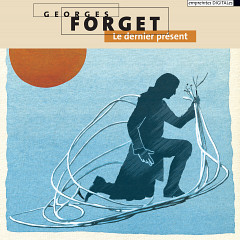
    Établi à Montréal depuis 2001, le compositeur d’origine française signe ici sa première monographie en regroupant des œuvres électroacoustiques composées entre 2007 et 2010, dont une a été revisitée en 2014 à l’occasion de cette parution sur disque.

    La musique de Georges Forget est intensément poétique et nous emmène naviguer sur les eaux troubles de l’âme humaine. Toujours en suspension, nous sentons le souffle et le cœur qui bat dans cette musique qui respire amplement, mais qui malgré cela, nous coupe le souffle par son intensité. Bien qu’elle soit empreinte de mélancolie et de fatalisme, voire parfois inspirée de thématiques sinistres (nuit, guerres, solitude), ce qui fascine le plus dans cette musique, c’est que l’auditeur se trouve toujours immergé dans des sonorités grandioses et lumineuses, plongé dans un état d’apesanteur à la fois déstabilisant et apaisant.

    À travers six titres, Forget nous transporte de la noirceur resplendissante de la ville qui s’endort (Urban Adagio, 2010) au chant d’une enfant sur la plage et jusqu’en haute mer (L’appel, 2008), en passant par Une île (2009) aussi mystérieuse qu’une femme… Nous ne sommes pas étonnés que la majorité des notes du livret soient des textes poétiques ayant manifestement inspiré les compositions, comme cet extrait de Problèmes prosés de Wahed Gotref qui correspond si bien à l’esprit de l’œuvre Métal en bouche (2008):

    Sans nous dérober à la vie, nous sommes-nous néanmoins jamais laissés entièrement aller à son onde, lâchés et souples, impassibles à demain? Pour nous qui n’avons jamais su rêver qu’au passé, demain fut toujours une menace. Et pendant ce temps, nous n’aurons fait que dérober aux choses un peu de leur éclat.

    Dans Orages d’acier (2007), la forme est complexifiée par des juxtapositions de moments d’intensité violente et de moments que le compositeur qualifie de «longs espaces de vide», quoiqu’ils sont profondément habités et vivants. Sublimant ainsi, en musique, la violence et l’angoisse de la guerre, l’œuvre se termine sur un chant militaire parfaitement intégré. Charles Baudelaire embarque aussi dans cette odyssée musicale en étant cité dans le livret. L’œuvre révisée du programme, Seul et septembre (2008, rév. 2014), est accompagnée d’une citation de L’invitation au voyage de Charles Baudelaire, dont certains mots, à eux seuls, résument à merveille l’impression générale que nous laisse l’écoute de ce disque:

    Là, tout n’est qu’ordre et beauté,
    Luxe, calme et volupté.

    … immergé dans des sonorités grandioses et lumineuses, plongé dans un état d’apesanteur à la fois déstabilisant et apaisant.

    Morphogenèse in Chain DLK

    “Review”, Vito Camarretta, Chain DLK, March 10, 2016
    Thursday, March 10, 2016 Press

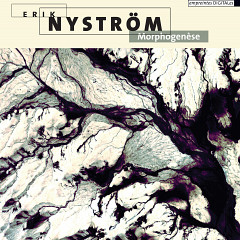
    British[-based] computer composer Erik Nyström seems to focus more on the process of making a shape than the shape itself in the explorations that got collected in Morphogenèse; the explanation of a process could be more or less an easy task, but rendering it by means of sounds is much more engaging and troublesome, but Erik managed to walk over this arduous and somehow trackless path by means of riveting sonic strategies, that he developed within pertaining conceptual field. A sort of elastic noise is the sparkle of the opening Catabolisms, whose thrilling sequence of aggregating and disgregating textures really mirrors the description of catabolic processes by German art theorist and perceptual psychologist Rudolf Arnheim in his essay Entropy and Art (“all sorts of agents and events that act in an unpredictable, disorderly fashion and have in common the fact that they all grind things into pieces.”), referred in the introduction of the track, which gradually reaches a sort of point of no return, where the breaking of all chemical bonding and the bursts of energy that followed each step of these catabolic processes pushes listener close to a sort of nowhere; similarly, a sonic sparkle — the elongation of a pure frequency of a sort of diapason — ignites the following Latitudes, a track which manages to evoke a generative process of gradual expansion that begins with a compressed sonic corpuscle. Lucent Voids, the longest composition of this collection, sounds like an unpredictable game, whose aim is the modelling and the thinning of the diaphragm between time and space, while Erik seems to add film and sheers to pure sounds on the track Cataract in order to render the analogy with the medical condition of the eye lens as well as the Greek etymology of the term “acousmatic” — its origin can be traced back to Pythagoras and should derive from the term akousmatikoi, the outer circle of the disciples of the Greek philosopher who could hear the lessons of their teacher, who spoke from behind a veil so that his presence could not distract them from the content of his lessons. These four pieces are stereo versions (for home listening) of pieces that were originally conceived for 8-channel concert projections, while “Far-from-equilibrium” — an impressive electroacoustic translation of almost randomly self-generating entropic sonic entities and textures — comes from a stereo tape. A pair of really good headphones is highly recommended.

    … an impressive electroacoustic translation of almost randomly self-generating entropic sonic entities and textures…

    Lépidoptères in Amusio

    “Kritik”, Stephan Wolf, Amusio, March 2, 2016
    Wednesday, March 2, 2016 Press

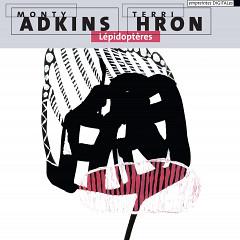
    Auf dem kanadischen (und in Sachen Elektroakustik und Akusmatik laut eigener Aussage weltweit führenden) Label empreintes DIGITALes ist soeben mit Lépidoptères eine Kollaboration des britischen Komponisten Monty Adkins (Professur für experimentelle elektronische Musik an der Universität Huddersfield) und der „kreativen Seiltänzerin“ Terri Hron aus Kanada erschienen. Sie geleitet den Hörer in die Welt von Wasserjungfern, Pfauenspinnern und Eintagsfliegen.

    Dabei dürfen Zweifel angemeldet werden, dass es Entomologen vorbehalten sei, Lépidoptères zu verstehen und wertschätzen zu können. Aber anders als ein gemeiner Naturbeobachter, der mitunter anthropomorphe Assoziationen zu allem was kreucht und fleucht entwickelt, enthalten sich Monty Adkins und Terri Hron eines emotionalisierten Transfers. Ihre Kompositionen scheinen vielmehr in den Closeup der reinen Anschauung vorzudringen.

    Interesselosigkeit kann dabei „natürlich“ nicht vorausgesetzt werden. Und doch fällt es unmöglich zu entscheiden, inwiefern die Musik letztlich nicht doch von Vorstellungen geprägt wurde, die sich anhand dezidiert biologischer Vorgänge kaum verifizieren lassen. Mit Rekordern und Elektronik nähern sie sich ihren Sujets, abstrahieren dabei jedoch wesentlich entschlossener als etwa Greame Revells The Insect Musicians (1986). Die musikalische Mimesis überhöht die konventionelle Imagination und führt so — erstaunlicherweise — zu einem Naturerleben von geradezu unmittelbarer Art. Aber eben nicht nach Art der Natur. Sondern, eben, als Kunst.
    Sondern, eben, als Kunst.
  • 103
  • 104
  • 105
  • 106
  • 107
  • 108
  • 109
  • 110
  • 111