Sauter au contenu principal
electrocd

Blogue

4252 résultats
  • 634
  • 635
  • 636
  • 637
  • 638
  • 639
  • 640
  • 641
  • 642
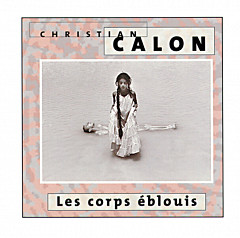
  • Les corps éblouis dans Le Devoir

    «Critique», François Tousignant, Le Devoir, 14 mars 1998
    samedi 14 mars 1998 Presse

    Le titre annonce bien la nature de la collection: des disques compacts de courte durée sur lesquels on ne retrouve qu’une seule et relativement brève œuvre. Ici, une des dernières créations de Christian Calon, lancé lors de son passage à Réseaux. Le disque se fait alors prolongement du concert, entrouvre d’autres aspects de la personnalité du compositeur.

    Audiblement Christian Calon est un séducteur. A l’instar de Casanova, il sait exactement trouver le beau son, et aussi faire monter la tension avec des utilisations un peu plus agressives du timbre. Rassurez-vous: jamais du volume. Nous avons affaire ici à un compositeur, pas un manieur de décibels.

    Ses «Corps éblouis» ont été réalisés dans les studios de l’Ina-GRM, et cela s’entend. Il est curieux de constater, encore et toujours, à quel point le lieu de réalisation d’une œuvre électroacoustique marque sa sonorité par les possibilités et l’équipement contrastants des divers studios. Ici, les carillons et les tenues graves sont une véritable signature que Calon utilise avec discrétion. On entre alors dans un autre univers, un peu comme celui de la méditation transcendantale, sorte d’influence d’un zen qui aurait perdu tout orientalisme folklorique pour se contempler lui-même.

    En laissant aller son oreille, elle découvre alors un parcours poétique dont la profondeur s’enrichit d’écoute en écoute. Ce qu’on manque en richesse d’espace (nos salons nous limitent à la stéréophonie), on le gagne en pouvoir de réécoute.

    … il sait exactement trouver le beau son, et aussi faire monter la tension …

    Les corps éblouis dans Vital

    «Review», MP, Vital, no 119, 13 mars 1998
    vendredi 13 mars 1998 Presse

    The latest in a series of many brief compositions released by this peerless Canadian label who have played a major role in rejuvenating (more academic) electroacoustic music. Much of what they release are commissions from the French and Canadian governments or their appointees, who operate through some of the best electronic studios in the world. (No, Pierre Boulez is still in a world of his own, somewhere close to the sewers of Paris.)

    Christian Calon is a member of the younger generation of electroacoustic composers most of whom have access to the latest sound modifiers and so, like their predecessors, have to approach their tools in very individualistic ways in order to sound different to the rest of their gang. Mr Calon has a full length CD [Ligne de vie] out on empreintes DIGITALes which is still quite groovy and which I still bung on once in a while as an interesting counterpoint to everything else I have accumulated. What I find interesting about a lot of contemporary electroacoustic music is the limitations the composers set upon themselves.

    In this case [Les corps éblouis] Mr Calon sourced all sounds from an electric guitar and then he twisted them about, topsy-turvy like, using some quite accesible but still phenomenal software and additional devices, which make a guitar sound like anything but itself. The composition itself is 22 minutes long, but while listening to it I felt it had reached its level by about 17 minutes in. Then it built up again to another (less shattering) crescendo about a minute before the end. Absorbing stuff though.

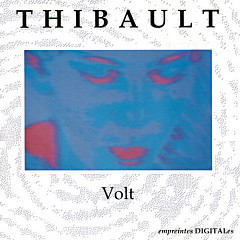
    Volt dans Splendid E-Zine

    «Review», George Zahora, Splendid E-Zine, 9 mars 1998
    lundi 9 mars 1998 Presse

    Because I don’t have any sort of music-related academic qualifications (unlike some of my Splendid peers), I was a little bit nervous about reviewing something by a founding member of the Canadian Electroacoustic Community. Luckily, my fears about what to do if I didn’t like Volt were mooted by the fact that it’s a wonderful, dynamic album, full of motion and energy and thought and collisions of harmony and dischord that are enjoyable even if you’re not writing a dissertation about them.

    Concerto pour piano MIDI mechanizes the classical concerto format, and features a human soloist attempting to keep pace with an electronic ‘performer’ not limited by human constraints like physical speed, finger length, and so on. Le soleil et l’acier (Sun and Steel) combines Asian gamelan-type sounds with undulant keyboards, intermittent electronic percussion and an otherworldly soprano — even at its most random, it’s a thoroughly engrossing piece. OUT builds a futuristic keyboard tale over four parts, using a Ronald Reagan sample and a variety of sharp ‘orchestra-hits’ and percussive melodies. ELVIS (Électro-lux, vertige illimité synthétique), based on Timothy Leary’s eight mutation phases of life, is a faux-orchestral vision of dischordant, seething beauty, and as for the closing piece, Volt… you’ll have to hear it for yourself, on the Boombox. If the whole electroacoustic thing seems a little too pointy-headed to you, this is the disc that’ll show you how wrong you are.

    If the whole electroacoustic thing seems a little too pointy-headed to you, this is the disc that’ll show you how wrong you are.

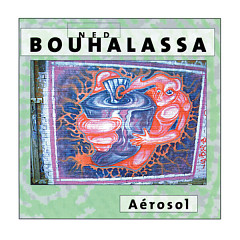
    Aérosol dans Hollow Ear

    «Review», Richard Cochrane, Hollow Ear, 1 mars 1998
    dimanche 1 mars 1998 Presse

    Bouhalassa is something of a bright young thing in Canada’s electroacoustic scene. And, as befits such a position, he shies away from the academic pigeonhole in favor of something more eclectic and more modern-sounding. The bio says he’s influenced by Nirvana, Sonic Youth, and Public Enemy. I can hear you cringing already; these obvious names conjure an image of an ivory-tower academic trying to get with-it, like your teachers dancing at the school disco. In fact, such influences are very much submerged in a well-developed musical imagination.

    The first track, Jets, will serve as an example of his approach. It’s very much object-oriented; self-contained events move around, develop, overlap and re-appear in an open field. Very effective it is too, and completely abstract, although there are moments which have a more conventional musical texture. The composer astutely identifies these as ‘nostalgic,’ perhaps giving some insight into his relationship with those influences from popular music — and, in a coup of meta-meta-humour, one can even catch a sample of rhythmic, 70s-style robotic speech halfway through Attraction which strongly echoes the Beastie Boys’ Intergalactic, itself a tribute to the age of Space Invaders and Old Skool Hip Hop. Whether this specific reference is intentional or not, this complex, textured, unromantic use of recognizable elements from other music is typical of the rest of the disc.

    Bouhalassa says something revealing in his comments on another track, Move 1, when he refers to the “exchange or contrast between the recognizable (stable) and the unknown (unstable).” Thinking of movement in terms of a series of exchanges between stability and instability, a balancing act of a dynamic equilibrium, is helpful when applied to all kinds of music, but most explicitly to music like this. To think of these sounds as objects is also helpful; they are objects which can explode, collapse, propagate, dissipate, emerge anywhere, combine with one another and produce weird hybrids. Bouhalassa seems most fascinated by the idea of sonic movement, the concept that a sound can become an object which moves in a conceptual space (we are not talking here about the stereo field, of course). It’s an interest which produces difficult music, certainly, and not stuff which follows the conventional musical lines of development. Without conceding that this is “ideal chill-out music” — it’s too surprising, it buffets you and comes at you from strange angles, shouting ‘boo’ — it’s certainly absorbing.

    … something more eclectic and more modern-sounding […] in a well-developed musical imagination.

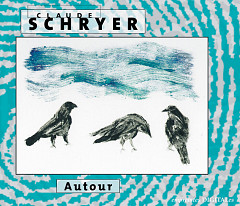
    Autour dans Le Musicien

    «Critique», Le Musicien, no 10:2, 1 mars 1998
    dimanche 1 mars 1998 Presse

    Le compositeur électroacousticien Claude Schryer nous propose ici un album qui réunit quatre compositions formant un cycle d’œuvres, chacune portant sur la prise de conscience et sur la musicalité de l’environnement sonore nord-américain.

    Symboliquement, ces compositions représentent aussi les quatre points cardinaux de L’Amérique du Nord et sont présentées sur ce disque dans l’ordre du cercle de vie amérindien (Est, Sud, Ouest, Nord).

    On y découvre ainsi un récit sonore inspiré de l’histoire, du caractère et du mystère de la Ville de Québec; une collection de sonographies d’espaces sonores mexicains; un portrait impressionniste du paysage sonore de Vancouver; et un concert de sirènes de bateaux et de cloches dans le Vieux-Port de Montréal. Un album vraiment étonnant.

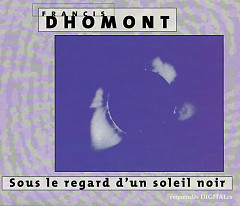
    Sous le regard d’un soleil noir dans Le Musicien

    «Critique», Le Musicien, no 10:2, 1 mars 1998
    dimanche 1 mars 1998 Presse

    Comme le souligne lui-méme le compositeur Francis Dhomont, cette nouvelle édition discographique de Sous le regard d’un soleil noir, un mélodrame acousmatique, s’inscrit dans la perspective plus ambitieuse d’un ensemble d’œuvres s’inspirant toutes d’une réflexion psychanalytique: le Cycle des profondeurs.

    Sous le regard d’un soleil noir est l’histoire d’un naufrage: dérive hallucinée à travers un paysage obsessionnel dont la note si est l’obsédant axe tonique qui cimente entre elles les huit sections qui composent l’album. Cette pièce a été inspirée par la lecture de l’œuvre du psychiatre et psychanalyste Ronald D Laing. Le disque est accompagné d’un volumineux livret.

    … dérive hallucinée à travers un paysage obsessionnel…
  • 634
  • 635
  • 636
  • 637
  • 638
  • 639
  • 640
  • 641
  • 642