Sauter au contenu principal
electrocd
  • This website is also available in English.

Blogue

4252 résultats
  • 630
  • 631
  • 632
  • 633
  • 634
  • 635
  • 636
  • 637
  • 638
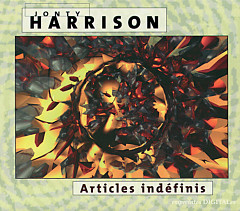
  • Articles indéfinis dans Factsheet Five

    «Review», R Seth Friedman, Factsheet Five, no 64, 14 juillet 1998
    mardi 14 juillet 1998 Presse

    Another compelling experimental recording from empreintes DIGITALes. Jonty Harrison makes heavy use of electronics and tape manipulation in a way that’s very old-school. However, unlike lots of the early experimental musique concrète, Harrison’s stuff is very lyrical, in a way that makes for a very enjoyable listening experience. Five tracks on this album, maxing out the disk at over 77 minutes. The final track Hot Air used samples from children’s ballons to create a mysteriouly textured piece. The production is chrystiline, allowing you to hear every nuance of this unique recording.

    The production is chrystiline, allowing you to hear every nuance of this unique recording.

    Île bizarre, Ambiances Magnétiques dans SOCAN — Paroles & Musique

    «Pour les amateurs de musique actuelle», Jean-François Denis, SOCAN — Paroles & Musique, no 5:7, 1 juillet 1998
    mercredi 1 juillet 1998 Presse

    Au cours des derniers mois le collectif de musique actuelle Ambiances Magnétiques a produit une série de disques portant son catalogue à plus de 60 titres. Le premier de cinq nouveautés brièvement présenté ici s’intitule Inédits et est la troisième compilation des membres d’Ambiances Magnétiques: Michel F Côté, Jean Derome, André Duchesne, Joane Hétu, Diane Labrosse, Robert Marcel Lepage, René Lussier, Danielle Palardy Roger et Martin Tétreault. Contrairement aux deux premières compilations constituées de repiquages, Inédits présente justement 24 œuvres qui se trouvent sur disque pour la première fois.

    Pierre Tanguay, batteur vedette des musiques actuelles, et Tom Walsh, tromboniste éclaté, ont enregistré Midi tapant. Des musiques qui sont à la fois planantes — par accumulation de couches sonores — et très dynamiques: Tanguay et Walsh jouent à plein poumon, à bras raccourcis.

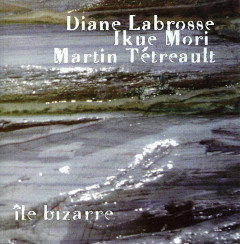
    Un trio ad hoc de bruististes improvisateurs électroacousticiens, Diane Labrosse (échantillonneur}, Ikue Mori (percussions électroniques} et Martin Tétreault (tourne-disques) offrent Île bizarre où l’oreille est attirée, menée dans tous les recoins de ce monde inventé, purement sonore, dont les sources sont méconnues. C’est un travail sur la surface des haut-parleurs et pour l’imaginaire qu’il déclenche dans mon écoute.

    Chansons de Douve est un album double présentant la grande œuvre poétique de Pierre Cartier (sur des textes de Yves Bonnefoy). Hybride de musique ancienne et jazz improvisée, Chansons de Douve est constitué de 14 pièces strictement composées, mais laissant place aussi à l’instantanéité des interprètes, pour un ensemble de dix musiciens: Angèle Trudeau (soprano), Noëlla Huet (mezzo-soprano), Pierre Cartier (basse électrique et voix), Jean-Denis Levasseur (saxophone alto), Jean Derome (saxophone alto, flûte et flûte en sol), Ivanhoe Jolicæur (trompette), Sylvain Jacob (trombones alto et ténor), Tom Walsh (trombone), Pierre Tanguay (batterie), Julien Grégoire (percussions).

    Finalement, le cinquième disque est le dernier à ce jour de l’Orkestre des Pas Perdus, sous la gouverne de Claude Saint-Jean, Maison douce maison avec des musiques de jazz… dansantes… qui toujours suscitent l’écoute. Avec les excellents et solides musiciens Rémi Leclerc (batterie), Jean-Denis Levasseur (sax alto, piccolo), Roberto Murray (sax ténor, flûtes), Jean Sabourin (sousaphone), Claude Saint-Jean (trombone) et Maxime Saint-Pierre (trompette, flugelhorn).

    Île bizarre dans Exclaim!

    «Release Tour Mind…», Spike Taylor, Exclaim!, 1 juillet 1998
    mercredi 1 juillet 1998 Presse

    On Île bizarre, Tétreauit is joined by Diane Labrosse (keyboards, sampler) and Ikue Mori (drum machines) to make hell of their technologies in a full-length search tor noise redemption. This is a found paradise of sound where the buzzing of bees is replaced with trying wires and the sun shines angry and grey. Each member contributes brilliance to the mood, a soundtrack to a boiler room chase scene. This is one of the most captivating listening hours I’ve spent in days and days of wandering from town to town.

    This is a found paradise of sound where the buzzing of bees is replaced with frying wires and the sun shines angry and grey.

    Ondes dans Le Devoir

    «Des ondes Martenot au clavecin, la musique pour clavier sait prendre tous les visages», François Tousignant, Le Devoir, 20 juin 1998
    samedi 20 juin 1998 Presse

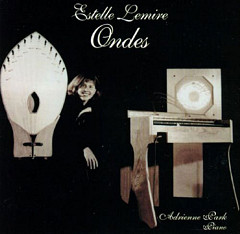
    […] On tient ici une pièce de grande qualité [Voix blanche de Gilles Gobeil], où l’intégration entre la bande et l’instrument en direct est formidablement réussie. Un univers mixte, s’inspirant de la panoplie acousmatique, d’un certain langage harmonique traditionnel, et de trucs (glissando, écho, attaques supprimées…) qui produit d’abord un effet, puis une impression. Étonnant et gratifiant, surtout aussi bien joué…

    … formidablement réussie.

    Île bizarre dans Montreal Mirror

    «Review», Chris Yurkiw, Montreal Mirror, 11 juin 1998
    jeudi 11 juin 1998 Presse

    No man is an island––not even a bizarre one — so turntable torturer Martin Tétrault hooks up with compatriot Diane Labrosse and Japan’s Ikue Mori for this updated take on musique concrète. Labrosse sounds like she’s reconstructing the didgeridoo on her sampler, Mori evokes Africa with her “talking” electronic drums and Tétrault colours between the lines, playful, provocative and proving that those who get called musique actuelle are just as good at electroacoustics. 8/10

    8/10

    Miniatures concrètes dans New York Press

    «Music Xtra», Kenneth P Goldsmith, New York Press, no 15, 10 juin 1998
    mercredi 10 juin 1998 Presse

    There have been two iconic pocket symphonies written in the 20th century: Érik Satie’s Vexations and Brian Eno’s Windows 95 Startup Sound. Both are concentrated miniatures, both are resistant to familiarity and both stand up to countless repetitions of enjoyable listening (the big difference is that Satie never got thousands of bucks to write his). Today both hold up so well because of the precise way that each sums up their respective moments’ tiny, eloquent statements. Sandwiched between these two works have been numerous attempts to commission or compile pocket symphonies on record, the most outstanding being The ResidentsCommercial Album and Miniatures: A Sequence of Fifty-One Tiny Masterpieces edited by Morgan Fisher from 1980.

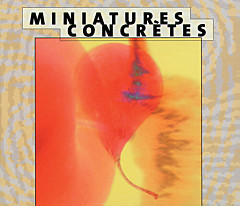
    Now two new attempts have caught my attention: Four Years in 30 Seconds and Miniatures concrètes. Both deal in extremely experimentaf music, but one reeks of nostalgia while the other catches our moment with precision. Miniatures concrètes celebrates the 50th anniversary of musique concrète by commissioning 24 electroacoustic musicians from around the world to create three-minute works. The composers, all born after the invention of musique concrète (the oldest is 49, the youngest 26), stick close to the stock vocabulary of tweaks and thumps, whooshes and echoes that was defined by pioneers of the genre half a century ago. And although most of the work is composed on computer, there’s precious little recognizable sampling, appropriated or plundered sounds.

    In this way, the disc is disappointing in its traditionalism, as radical as that tradition might be. I wish these composers would break some rules. However, there are a few exceptions: Roger Doyle’s The First Spirit Level uses manipulated organs and voices to achieve a cut-up action-flick soundtrack feeling. Justice Olsson’s A Man is a Delicate Flame boils down 1500 samples to create something that sounds like a three-minute vocal outtake from The Pet Sounds Sessions. The most interesting track, by far, is Richard Karpen’s Mass which embeds tiny sampled riffs from Hendrix’s Little Wing into a mass of mantric electronics. With this sly use of music history samples, Karpen seems to be the only one on the disc bringing electroaoustic music up to date. […]

  • 630
  • 631
  • 632
  • 633
  • 634
  • 635
  • 636
  • 637
  • 638