Sauter au contenu principal
electrocd
  • This website is also available in English.

Blogue

4252 résultats
  • 625
  • 626
  • 627
  • 628
  • 629
  • 630
  • 631
  • 632
  • 633
  • Contes de la mémoire dans Artefakt

    «Kritik», Erik Benndorf, Artefakt, no 5, 1 décembre 1998
    mardi 1 décembre 1998 Presse

    Jon Appletons Lebenslauf wirkt mächtig. Er wird als Mitglied einer Gruppe Forscher, die das Synclavier hervorbrachten und aufgrund seines weltweiten Engagements um die Elektroakustik gewürdigt. Sein Essay im umfangreichen Booklet ist offen und ehrlich: “I had no idea what I was doing”, “The music shouid stand for itself”, “we should feel elation at the approach of a new order of civilisation” und der Paradesatz des selbstbewußten Künstlers: “Today, when I start a new piece, is a fear that I can do nothing truly new.” Die Contes de la mémoire des Herrn Appleton sind selbstverständlich allesamt neu, werden es auch hartnäckig bleiben und jede weitere Reproduktion gleichgültig hinnehmen. Das macht sie jedoch keineswegs gut. Außer der Beharrlichkeit des Musikers in den Anfangstagen der erschöpften Kunst, fremdartigste Geräusche zu sammeln und zu produzieren, und der Tatsache, daß Herr Appleton der treibenden Individualisie rung des Komponierens mittels Schere und Kleber weitreichende Schübe gab, kann ich nichts würdigen. Das ist nicht wenig, aber seinen Geschichten mangelt es an deutlich an Leidenschaft, an Hingebung für Schokotorten und den Stiefel in der Fresse. Die Contes de la mémoire ruhen bereits stolz, aber fernab, im Archiv. Abschließend meinte Jon Appleton: stop reading here.

    Articles indéfinis dans Computer Music Journal

    «Review: Another British Invasion!?», Laurie Radford, Computer Music Journal, no 22:4, 1 décembre 1998
    mardi 1 décembre 1998 Presse

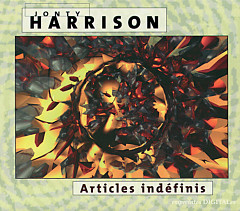
    Another British invasion!? UK electroacoustic composers over the past several decades have been actively focused on fortifying the compositional and theoretical foundations and potential for acousmatic art music through high standards of teaching, production and performance. The works of Wishart, Emmerson, Lewis, Barrett, Stollery and Smalley are heard worldwide on concert programs and their ideas and writings have appeared in scholarly publications with increasing frequency. Jonty Harrison, based in Birmingham [UK], is among these talented and dedicated individuals who have taken up the cause of musique concrète, écoute réduite (reduced listening), and objet sonore (sound object) along with other aspects of the work pioneered by Pierre Schaeffer and the Groupe de recherches musicales (GRM) in the 50’s and 60’s. They appear to have set themselves the task of profoundly expanding the limits of this art as well as establishing and re-evaluating the means of discussion and analysis for an art form which often suffers from a lack of shared terminology and theoretical principles.

    The sound world of Jonty Harrison is that of rich source materials scrutinized for all perceptible attributes and subsequently submitted to an array of transformations. These transformations push the materials further and further from their source while at the same time imbuing the new compositional context with timbral and gestural cohesion. In fact, it is remarkable to listen to the selections on this 1996 release, Articles indéfinis, which span seventeen years and hear such coherence and consistency of purpose, style and technique. In the words of his colleague, Denis Smalley, Jonty Harrison’s music is “volatile in its agitation, its wayward energies, the restlessness of its short-breathed phrases, the unpredictable pushing and shoving of its gestures, its punchy presence, its elegantly controlled aggressiveness.” As Smalley also points out in the introduction of the accompanying booklet, the fact the Harrison is the Director of, and a frequent performer with the Birmingham ElectroAcoustic Sound Theatre (BEAST), the multichannel acousmatic potential of his materials is always a primary consideration in their choice and compositional placement. This is a music of careful craftsmanship, an etching and molding of objects and textures, a control of motion, speed, direction and distance, a “listening inside sounds… which can give rise to new external(ized) musical forms.”

    Pair / Impair (1978) is the oldest work presented on the disc and offers an appropriate introduction to Harrison’s origins. In the form of an extended study in electroacoustic transformational techniques, in a similar vein as Parmegiani’s De Natura Sonorum (1975), Pair / Impair is a search for balance and equilibrium between opposites. There is a supple elasticity to Harrison’s approach to time in this as in all of his work: one moment his objects flutter and rebound, are dashed against one another, explode and recombine; a suddenly, they halt and hover, frozen in textural and timbral configurations, only to give way in due time to further perturbations.

    … et ainsi de suite… (1992) is a substantial, ultra-refined study in creating a lot from a little. Here the source material originates with soundsd elicited from some rough-textured wine glasses which are subsequently submitted to a gamut of extreme transformations and re-transformations, producing in the end a work of vast gestural and timbral diversity. Yet once again, a sense of unified character and direction is achieved via the frequent dialogue between original source material and the many levels of mutation and recombination Harrison employs. Eleven movements of varying duration present elements of exposition, parenthesis, commentary and recapitulation as we follow the attacks and resonance of the glass sounds through time-stretching, pitch shifting, truncation, and a myriad of textural constructions. Unsound Objects (1995) continues this compositional path while increasing the element of ambiguity “evoked when recognition and contextualization of sound material rub shoulders with more abstracted (and abstract) musical structures.” Swirling flashes of highly processed sound frequently lead the listener to the initial sounds sources such as walking on granular materials, falling rain, and the electroacoustic archetypal opening of a creaky door. The pendulum-like alternation sets up a sense of global rhythm within which “interconnections and multiple levels of meaning proliferate.”

    The final two works on Articles indéfinis arise from the gestural properties of air. In Aria (1988), subtle connections between the frequency and velocity trajectories of gusts of air and the inner workings of the human vocal mechanism are explored. Ascending and descending flourishes, which constantly increase or decrease in speed, are anchored by slowly evolving spectral complexes. One has the impression of the simultaneous presentation of several temporal levels which control and guide the listener in appreciating the unfolding of rich and evocative timbral transformations. Hot Air (1995) is concerned on one level with further implications of the concept of air (balloons, breath, heat). But it goes further in its conceptual base in drawing upon the idea of air as the propagator of sound itself and the resulting association of linkage from one sound to another. The most extreme examples of combinating unprocessed environmental recordings with radically transformed sound materials (often of these same original field recordings) to be found on the disc are at work in Hot Air. The iterative cracklings of a roaring fire, the explosive imagery of claps of thunder, the squeaking of rubber balloons, and the overhead squawking of geese, to name just a few natural sound phenomena which are used, are combined, alternated and linked with sinuous, angular and often granular-like transformed materials in an interplay of timbral and metaphorical exchanges.

    Harrison’s music is a feast for the ear. It is decisively concerned with timbre, or to use Smalley’s term, spectromorphological design. Its premise and source is the rich inherent spectral and gestural character of natural sound from which models for exploration and extension arise. The works on this disc were produced at the studios of the GRM, GMEB, and the Universities of Birmingham and East Anglia and have garnered Jonty Harrison awards from Ars Electronica, Musica Nova and the ICMA.

    Harrison’s music is a feast for the ear.

    Autour dans Computer Music Journal

    «Review», Laurie Radford, Computer Music Journal, no 22:4, 1 décembre 1998
    mardi 1 décembre 1998 Presse

    Awareness of the diversity and wealth of sounds around us, a respect for “indigenous” sounds, the sounds of nature, of humankind, of the winds and oceans as well as the machines that dominate our daily aural experience, and the use of these sounds in a powerful artistic form embodied in electroacoustic musicthese are some of the objectives of a growing number of composers over the past quarter century. The World Soundscape Project (WSP) was founded in the early 1970’s at Simon Fraser University (SFU) in Vancouver by Canadian composer R Murray Schafer as a means of confronting and revealing the sounds that surround and accompany us in our daily lives, about their effects upon us, and our effects upon them. Several prominent composers such as Barry Truax and Hildegard Westerkamp were part of this seminal project in soundscape archiving and the development of methodologies for acoustic ecology.

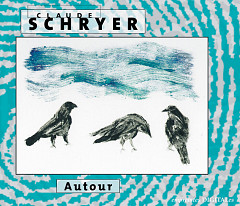
    The recent founding of the World Forum for Acoustic Ecology (WFAE) has brought to the fore several young composers who have taken up the cause and spirit of the WSP and developed and integrated its concerns and objectives into their own creative pursuits. Claude Schryer has been very active in this movement for over a decade and the 1997 release of Autour on the empreintes DIGITALes label gathers together some of his most representative work. The first selection on the disc, Musique de l’Odyssée sonore (1996-97), is a revised and condensed version of the music for a National Film Board of Canada (NFB) documentary on the soundscape of Quebec City and the theories of R Murray Schafer (as embodied in his 1977 text, The Tuning of the World). Film soundtracks do not always make for great pieces of music. But in this case, the origin of the film and its sounds are one and the same. Schryer’s sensitive shaping of sound materials, and his subtle timbral and temporal transformations blend the diverse array of materials into a convincing whole that confidently bridges the gap between original sound source and radical manipulation with obvious respect for the materials involved.

    El medio ambiente acústico de México (1995-96) takes us to the southern point of the North American acoustic experience. Schryer, referring to this work as a radiophonic soundwalk, takes the listener on a sonic journey through six dynamic and evolving Mexican soundscapes. From the opening fragmented Mosaico, through the undulations of Océano, the raucous interjections and bombardment of Transportación, to the children’s choirs and street festivals of Música, the buzzing, snorting, chortling and spattering of Naturaleza, and the irregular rhythms of the final meditative Campanas, there is a sense of unity and cohesion, of crafted phrasing, of a care taken in the presentation of these beautiful urban and rural sounds such that the listener is invited to share in the awe and wonder with which the composer approaches his materials.

    The pioneering spirit and activity of the WSP was highlighted and honored during the 1996 Vancouver New Music Festival where a number of new soundscape compositions were created utilizing the WSP archives at SFU as well as new recordings from Vancouver’s unique sound and seascape. One of these works, Schryer’s Vancouver Soundscape Revisited (1996) is included on Autour. (The entire series of compositions, as well as examples of original 1973 World Soundscape Project archive materials, is available on the Cambridge Street Records Soundscape Vancouver 2CD set [CSR 9701].) As with the other two works mentioned so far, this piece is a suite of short, thematically focused movements. They alternate calm, spacious waves of sound with frenetic exchanges of wildly diverse materials. The pandemonium of call and response between boat horns, trains and power line oscillations in Fire, or the granular cascades of Industry, contrast vividly with the calm of the opening movement Eagle, the duet between boat horns and a resident itinerant in Dronesong, or the gentle conclusion of Blowin’. A favorite is the visceral and politically charged juxtapositions in Beans. Schryer confidently leads us through diverse sound environments in a way that subtly clarifies the constituent sounds, their context, their shape and intrinsic character.

    The artistic use of the sound-producing potential of natural objects as well as man-made mechanisms is a fundamental premise of much audio art, sound installation work, and soundscape composition. Stemming from this is a tradition of harbor symphonies where the horns of various seafaring vessels, moored in various cities around the world, are used as a euphonious, bigger-than-life orchestra (that taking place in the city of St. John’s, Newfoundland, part of the bi-annual Sound Symposium, is perhaps the most well known). Autour d’une Musique portuaire (1996), created in collaboration with radio producer Hélène Prévost, documents a similar event in the harbor of Montréal where ships, trapped by the frozen St. Lawrence River, serve as instruments for several composers each spring. The original performance included six boats and their distinctive horns, the bells of the nearby Notre-Dame Cathedral, as well as the bells of two Canadian National Railway trains (in motion!), all coordinated by written scores and walkie-talkie communication with the composer. This ensemble’s performance was then recorded and broadcast live by Radio-Canada FM. The original recording captures the vastness of the Montréal port as it resounds and shapes the music of the horns and bells. The particular recording offered on this disc presents a group of soloists on saxophone, trombone, and bass clarinet improvising in a large studio with the original harbor recording. The sonorous impact and rhythmic possibilities inherent in the original piece are expanded upon and refined within the original framework. The inclusion of Schryer’s opening countdown and the cheering crowd assembled at the Vieux Port de Montréal at the work’s conclusion lend an air of exhilaration to this version of the piece.

    For those who have been intrigued by the idea of ‘soundscape’ composition, have never had a chance to experience it, or have wondered what could be done with that great series of recordings captured on your last exotic vacation, Claude Schryer’s Autour may offer your some ideas and a rewarding listening experience. The accompanying booklet and overall production of Autour is exemplary as has come to be expected from releases by empreintes DIGITALes. For those wishing more information about electroacoustics and ecology, check out the Spring 1998 issue of [Canadian magazize] Musicworks dedicated to individuals involved in soundscape composition.

    Autour is exemplary as has come to be expected from releases by empreintes DIGITALes.

    Zoo dans Aegri Somnia Vana

    «Review», Philip von Zweck, Aegri Somnia Vana, 1 décembre 1998
    mardi 1 décembre 1998 Presse

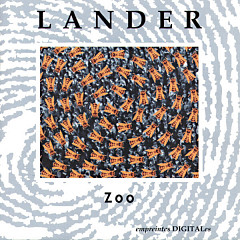
    Zoo is a must-have CD. Talking to a Loudspeaker, a piece originally part of the New American Radio Series, was one of the first pieces to make me think about sound, text, and communication. It is an amusing an intelligent run through ideas of radio and communication, broken down in to short, easy-to-digest pieces. For example [The News], there is an exercise in radio news, which presents two sides of an abortion protest, the political right positioned in the right speaker, and the political left in the left speaker, allowing the listener to adjust the balance. Destroy: Information Only is an experimental documentary of Lander’s problems with a back injury. It’s a frightful but beautifully executed piece. Failed Suicide is the shortest and oddest piece, in which unidentified voices depict, in a very strange manner, a suicide. The last track, City Zoo / Zoo City, is a piece of digitally manipulated field recordings of a zoo, reinventing the animals as anything but animals. A very smart CD.

    Zoo
    A very smart CD.

    Kaleidos dans Computer Music Journal

    «Review», James Harley, Computer Music Journal, no 22:4, 1 décembre 1998
    mardi 1 décembre 1998 Presse

    The 40-year-old Stéphane Roy brings a background in literature to his work in electroacoustic music. This Montréal-based composer has received numerous awards for his music. The composer associates his style with the school of “acousmatic” composition of the GRM in Paris.

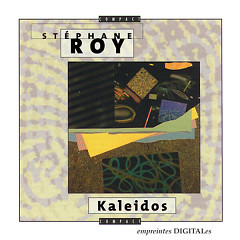
    Kaleidos brings together four compositions composed over the period 1987-1994. Mr. Roy’s sonic palette is consistent throughout this collection. In sudden gestures, he scatters fleeting sprays ot oily resonant grains. These are often mixed on top of distant, amorphous textures. Stéphane Roy also relies on another strategy: wide variations in dynamic range. Violent outbursts of energy emerge dramatically from near-silence to make curious gestures, then quickly disappear.

    Mimetismo (1992) is a virtuoso composition based on strumming in the style of Spanish flamenco guitar, spanning 10 min and 36 sec. The piece was realized in several stages, with initial work using the SYTER system at the GRM studios, and final editing at the studios of the Universite de Montréal. The piece hegins gradually, building frenetically to an extended summit (but not a climax) at 3:30. The intensity gradually lowers, and we are transported to a realm of distant atmospheres. I was impressed by the composer’s fluid treatment of macro form.

    Paysages intérieurs (1988), realized at the Universite de Montréal studios, works with a limited palette of source sounds that are transformed in the manner of musique concrète: filtered, transposed, remixed, spliced. The first several minutes consist of variations in what sound like small bells. The opposition between distant, Iooming figures and nervous cross-panning grains creates a dramatic landscape. As the composer states: “In these landscapes, where the unspoken reigns, a thousand fears suddenly emerge under the pressure of an interior murmur. The mysteries of our spirit open up ancient fratricidal debates, nourished by our entire existence” (program notes). This is a mysterious yet intriguing work, continuous in texture with a beautiful low-layer weaving throughout.

    Ondes / Arborescences (1987), created in Montréal a year before Paysages intérieurs, Iasts 9 min and 36 sec. It begins with a cascade ot high and low frequencies. The source of its watery timbres is untraceable. Pitch plays more of a role in the opening of this work, which adds layers of long sustained tones to create harmonic fields that eventually destadestabilize into noises. The (analog synthesizer?) pitches return, drifting down in amplitude and across the spatial panorama. The melodic material seems improvised and quasi-random, so although the piece is skillfuily mixed, I did not find this piece to be as strong as the others.

    Crystal Music (1994), at 14 min and 46 sec, is the newest and longest work on this disc. The work unfolds in the same unstable style as Mimetismo Realized with the Common Lisp music language, the first minute opens in a dramatic “acousmatic” style. As the composer states: “Like glasswork, the material has been expanded, moulded, transmuted in the fiery furnaces of experimentation.” A wide range of dynamics and techniques of granulation plays a major role in this tour-de-force of mixing.

    A wide range of dynamics and techniques of granulation plays a major role in this tour-de-force of mixing.

    Autour dans Slug

    «Review», Tom Schulte, Slug, 1 décembre 1998
    mardi 1 décembre 1998 Presse

    Autour is the name of Schryer’s release. First presented is a seven-movement Sound Odyssey [Musique de l’Odyssée sonore] which is a vicarious journey decorated with hooves, horns and bells. Called a “radiophonic sound walk” El medio ambiente acústico de México begins with a gunshot and ends with quiet footsteps and birds. It brings together a great collection of visual, recognizable sounds, Schryer’s work will strike the listener as the most disturbing or intriguing of recent [empreintes DIGITALes’] DIFFUSION i MéDIA releases…

  • 625
  • 626
  • 627
  • 628
  • 629
  • 630
  • 631
  • 632
  • 633